Hello Digital Lead! You participated in the kick-off event for our new Digital Lead Pharma Commercial Team. This was an exciting moment for all of us, and we embarked on this journey together. From February 25 to 27, 2025, We gathered in three different locations: European team members in Berlin, Asian colleagues in Beijing, and our US team in Whippany. And virtually on Teams! During our kick-off, we delved into three different themes: HUMANBOUND (= getting to know each other), HOMEBOUND (= who we are and our value proposition), and NETWORKBOUND (= our operating and collaboration model). Look into the Moments tab of this POAP and relive the occasion with the shared experiences of all those who collected the POAP as well. This surely was an unforgettable experience as we came together to shape the future of our organization. POAP dropped for Bayer DT&IT Pharma Design by stefankai with myGenAssist & Canva POAP Terms & Conditions: https://bayer.com/poap Bayer IT POAP Collection: https://collections.poap.xyz/bayer-it/

The Dominican Republic celebrates its Independence Day on February 27th, marking the country's independence from Haiti in 1844. This day commemorates the culmination of the Dominican War of Independence, led by Juan Pablo Duarte, Francisco del Rosario Sánchez, and Matías Ramón Mella, who are considered the founding fathers of the Dominican Republic. These leaders were part of a secret society called La Trinitaria, which played a crucial role in the independence movement. The conflict was rooted in cultural differences between Haitians and Dominicans, alongside economic disputes. After years of Haitian rule, the Dominican Republic declared its independence in Santo Domingo. It was followed by a series of battles, with the final major conflict, the Battle of Santiago, occurring in 1844, solidifying Dominican sovereignty. Celebrations are centered around the Altar de la Patria at the "Parque Independencia" in Santo Domingo. This monument houses the remains of the founding fathers and serves as a focal point for nationalistic ceremonies. The day is marked by the tradition of wearing the national colors—blue, red, and white—and the extensive use of music and dance to celebrate. Parades, cultural performances, and patriotic displays run also across the nation. Dominican Independence Day celebrates the Dominican Republic's rich culture, traditions, and the enduring spirit of its people. https://en.wikipedia.org/wiki/Dominican_War_of_Independence Art&Text🫶ChatGPT&Photoshop AI.

Felix Hoffmann, a chemist at the German pharmaceutical company Bayer, synthesized acetylsalicylic acid in a pure and stable form in 1897. Bayer patented the drug on March 6, 1899 under the name "Aspirin," issued in the US as patent 644,077, on 27 February 1900. It quickly became the world's most widely used medication (and it is today as of 2017). Aspirin was touted for its pain-relieving, anti-inflammatory, and antipyretic (fever-reducing) properties. It was indicated for a variety of conditions, including headache, dental pain, menstrual cramps, muscle and joint aches, and fever. Aspirin started as powder, but soon enough was pressed into tablets with the iconic Bayer logo. In the 1970s, studies began to reveal its potential in preventing heart attacks, leading to its use in low doses for cardiovascular protection. In 1982, Sir John Vane won a Nobel Prize for discovering aspirin's action in inhibiting prostaglandin synthesis. Today, Aspirin is on the World Health Organization's List of Essential Medicines, highlighting its importance in global health. It's estimated that annually, over 60 billion Aspirin tablets (35,000+ tons) are consumed worldwide, and a trillion since 100 years, underscoring its enduring impact on medicine. Its adoption for cardiovascular disease prevention and its role in pain and fever management make it a cornerstone of modern therapy. More: https://en.wikipedia.org/wiki/History_of_aspirin Art&Text🫶ChatGPT.

World Rare Disease Day, February 29, 2024
2024-03-06
Rare diseases are defined by their low prevalence in the population, leading to challenges in diagnosis, research, and treatment. Definitions vary; in the US, a disease is rare if it affects fewer than 1:1,500 individuals, Europe 1:2,000, Japan 1:2,500. There are some 7,000 rare diseases, impacting around 6-8% of the world at some point, some 300 million currently. They are incredibly diverse, ranging from genetic disorders to rare cancers, and can be chronic, progressive, debilitating, and often life-threatening. Some well-known rare diseases include cystic fibrosis, Duchenne muscular dystrophy, and Huntington's disease, each with their own unique symptoms, treatment challenges, and research needs. Rare diseases are closely related to orphan diseases, a term that originally referred to diseases neglected by drug developers due to the small market potential. However, the terms are now often used interchangeably. Legislation such as the Orphan Drug Act of 1983 in the U.S. has incentivized pharmaceutical companies to develop treatments for rare (orphan) diseases, offering benefits like tax credits and exclusive marketing rights. The rarity and diversity of these diseases pose significant hurdles for research and clinical trials, Raising awareness and support for those affected are crucial for research funding to develop diagnostics, treatments, and hopefully cures. https://en.wikipedia.org/wiki/Rare_disease Art+Text supported by ChatGPT

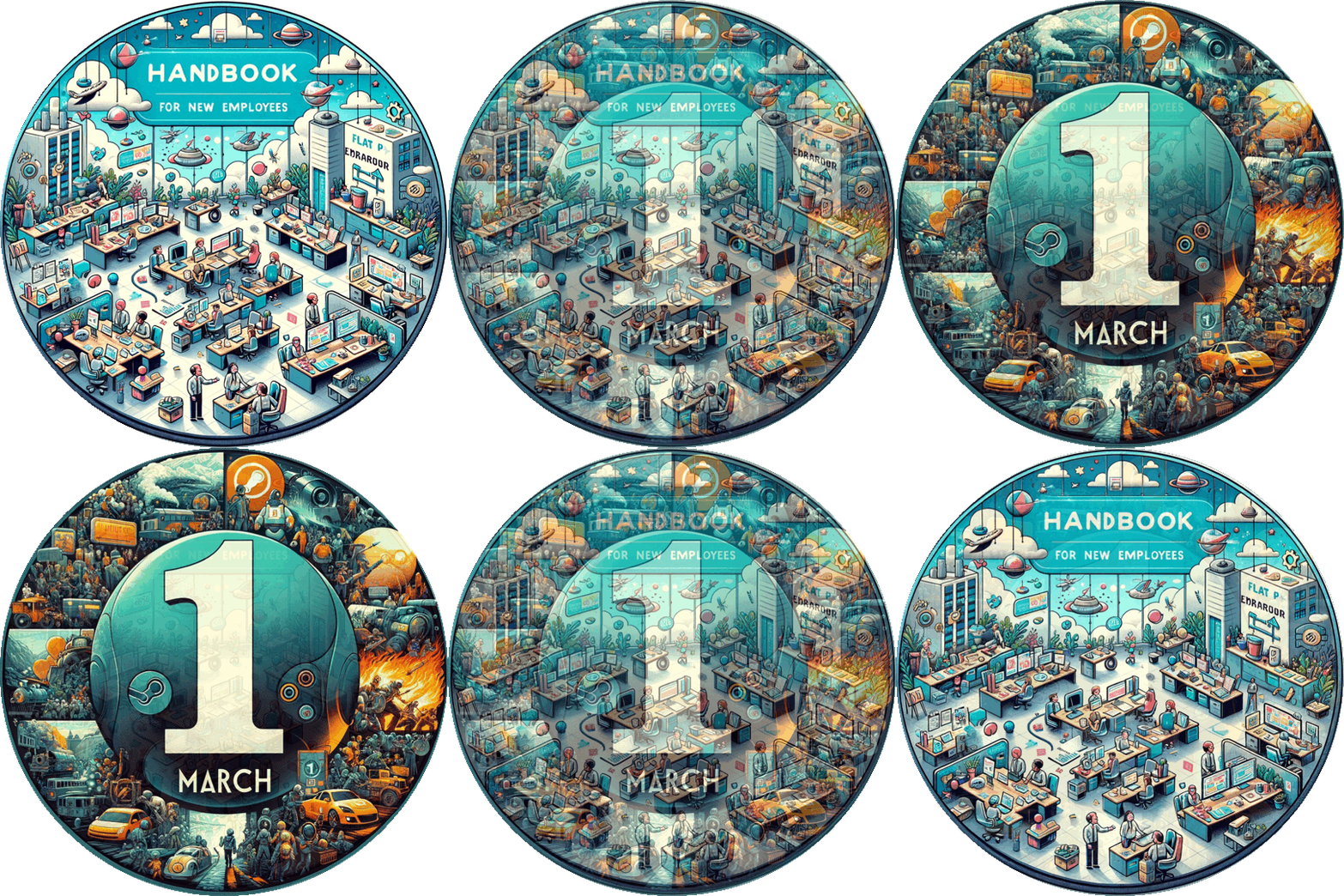
Valve Corporation, an influential player in the gaming industry, was co-founded by Gabe Newell in 1996 after he left Microsoft. Valve produced iconic games like "Half-Life" and "Portal" and revolutionized digital distribution with its Steam platform. Newell also implemented a unique flat organizational structure that fosters innovation and employee autonomy, setting them apart as a distinctive and forward-thinking company in the tech world. The Valve Corporation Handbook for new employees, published March 2012, is a distinctive guide reflecting the company's innovative and unconventional work culture. It has a candid and engaging approach to introducing Valve's flat organizational structure, where traditional hierarchies are eschewed in favor of a more democratic, self-managing ethos. Employees at Valve enjoy an unusual level of autonomy, with the freedom to select their projects and teams, emblematically illustrated by the concept of desks on wheels, enabling staff to physically move to the workspaces where they feel they can contribute the most. They hire "T-shaped" individuals—people who are not only experts in their field but also like to collaborate. The handbook includes humorous illustrations and comics to convey the company's culture and expectations; it is a reflection of the company's core philosophy that prioritizes innovation, independence, and a deep belief in its team members. Handbook: https://bit.ly/3wzMn3r Valve: https://bit.ly/3wCO7Jr Art&Text🫶ChatGPT.