Bayer Girls' Day is an annual event designed to encourage young women to explore careers in science, technology, engineering, and mathematics (STEM). The day typically features interactive workshops, hands-on experiments, and mentoring sessions led by experienced professionals, allowing participants to gain insights into various fields and build confidence in their skills. Through engaging activities, Bayer Girls' Day aims to inspire girls to pursue STEM careers and foster a more inclusive environment within these industries. It's an opportunity for young women to network, learn, and envision themselves in future roles within science and technology. Art&Text by ChatGPT.

Valentine's Day, celebrated on February 14th, is a day dedicated to love and affection. Its origins can be traced to both Christian and Roman traditions. The name "Valentine" likely comes from two Christian martyrs named Valentine who lived in the Roman Empire during the 3rd century. One of the legends surrounding Valentine suggests that he defied Emperor Claudius II's ban on marriages for young men, as Claudius believed that single men made better soldiers. Valentine continued to perform marriages in secret and was eventually arrested and executed on a February 14th. Legend says, he sent a love letter to his jailer's daughter, signing it "From your Valentine," which is a phrase still used today. Valentine's Day gained popularity over the centuries. In the Middle Ages, it became associated with romantic love. In the 19th century, the exchange of love notes and cards became a common practice. Today, Valentine's Day is a global occasion. 200+ million roses are grown, 20+ Billion USD are spent, 190+ million Valentine's Day cards are exchanged in the US alone. Piquant: Among people surveyed, 20% of men purchase gifts for multiple partners, while only 6% of women do the same. Today is perfect for quality time with your partner, or, maybe, embracing the opportunity to finally express affection to your secret love. Be Decent, Virtuous and Brave and —ask them to be your Valentine! More: https://en.wikipedia.org/wiki/Valentine%27s_Day Art by Dall-E, text supported by ChatGPT.

Chinese New Year 2024
2024-02-19
The Chinese New Year, aka Spring Festival, marks the beginning of the lunar new year and is the most significant Chinese holiday. Rooted in mythology, it's said to have originated from the ancient fight against the mythical beast Nian, with the use of firecrackers and red decorations symbolizing luck and prosperity to ward off evil spirits. It has been celebrated for over 3,500 years, evolving from sacrificial ceremonies to the gods at the year's end for good harvests. Today, it initiates with the new moon that appears between 21 January and 20 February and lasts until the full moon, encompassing generally a 15-day period filled with various rituals and festivities, culminating in the Lantern Festival. Around 1/4 of the world’s population participates. Family reunions are central to the celebrations, with millions traveling home in one of the world's largest annual human migrations, known as Chunyun. Practices include thorough house cleaning to sweep away bad fortune, decorating homes with red lanterns and couplets, exchanging red envelopes (hongbao) containing money for luck, and enjoying lavish feasts with symbolic dishes, such as fish served whole (including head and tail) symbolizing a prosperous start and finish to the year. Each year is named after an animal, believed to influence personality traits and fortune, and associated with an element. 2024 is the Year of the Wood Dragon. More: https://en.wikipedia.org/wiki/Chinese_New_Year Art&Text supported by ChatGPT.

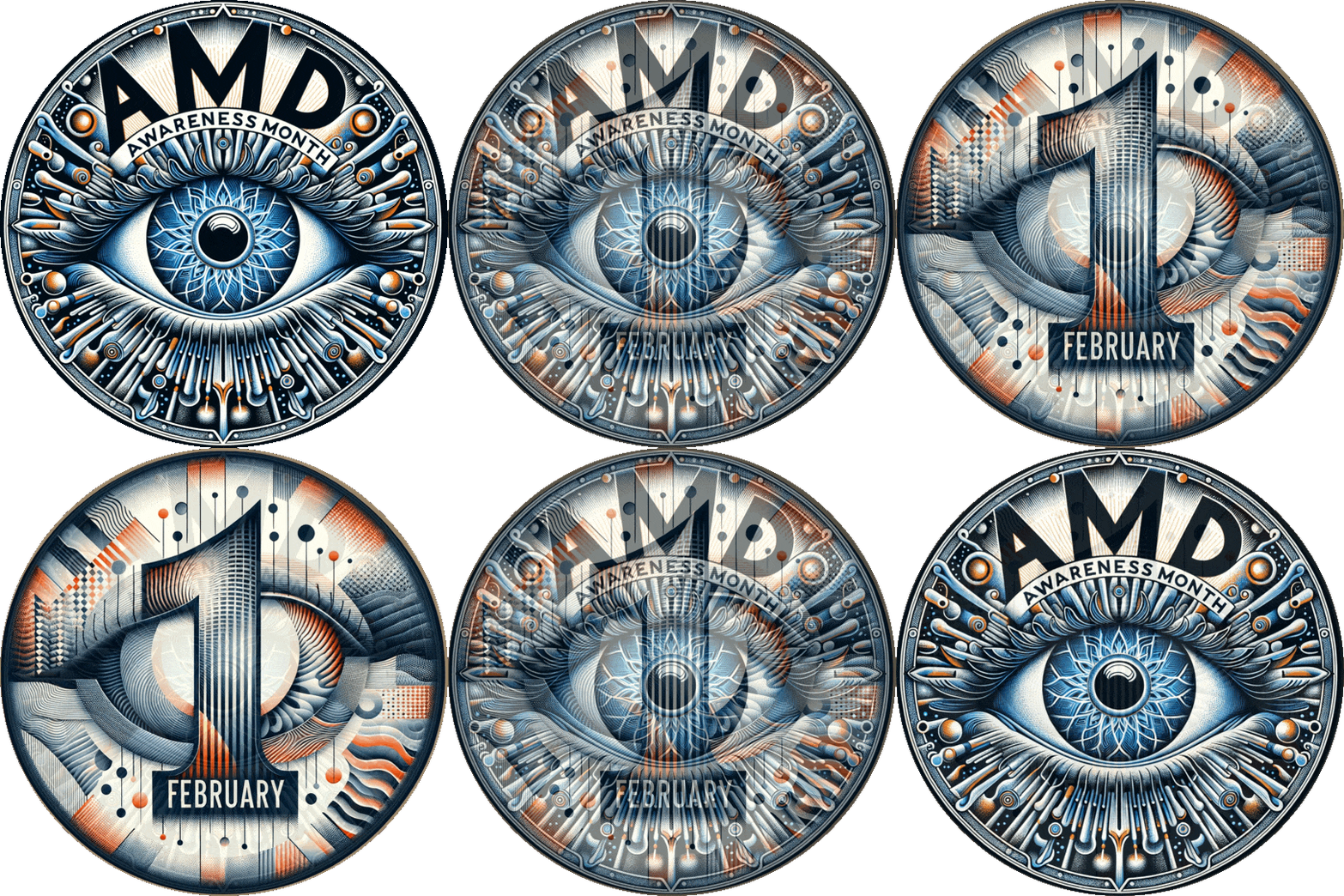
Age-Related Macular Degeneration (AMD) Awareness Month is observed to highlight the impact of AMD, a leading cause of vision loss among individuals aged 50 and older. Affecting the macula, the central part of the retina, AMD compromises sharp, central vision necessary for activities like reading and driving. There are two types of AMD: dry (atrophic) and wet (neovascular). Dry AMD is more common and progresses slowly, while wet AMD is characterized by rapid vision loss due to abnormal blood vessel growth. Globally, AMD impacts approximately 196 million people. The prevalence of AMD increases with age; about 30% of individuals over the age of 75 are affected. Genetics, race (more prevalent among Caucasians), and smoking, influence the risk of developing AMD. AMD was discovered in the 19th century, but it was only in the late 20th century that significant advancements in understanding and treating the condition were made. Detailed examination of the retina, facilitated by evolving imaging technologies, has been crucial in diagnosing AMD. Treatments vary by type but may include lifestyle changes, vitamin supplements for certain stages of dry AMD, and anti-VEGF therapy for wet AMD. Despite ongoing research, there is unfortunately no cure for AMD yet, making awareness, early detection, and preventive strategies key to managing its impact on vision and quality of life. More: https://en.wikipedia.org/wiki/Macular_degeneration Art&Text supported by ChatGPT.