International Women's Day, March 8, 2024
2024-03-11
International Women's Day (IWD), celebrated on March 8th annually, marks a global observance to honor women's achievements and advocate for gender equality. The day traces its origins to the early 20th century, catalyzed by women's labor movements in North America and Europe. The first National Woman's Day was observed in the US on February 28, 1909, inspired by the Socialist Party of America. In 1910, Clara Zetkin, a German activist, proposed the idea of an international day at the International Socialist Women's Conference, leading to the first IWD in 1911, celebrated in Austria, Denmark, Germany, and Switzerland. A core motive for IWD's inception was advocating for women's suffrage rights. The IWD gained recognition from the United Nations in 1977, which officially invited member states to proclaim March 8 as the UN Day for women's rights and world peace to highlight issues such as gender inequality, violence against women, and the need for gender parity in various sectors. In some countries, IWD is an official holiday, and men honor the women in their lives with flowers and small gifts. While there have been advancements in women's participation in politics and the workforce, significant gaps remain. IWD has mobilized movements, influenced policies, and brought attention to women's rights, showing the power of collective action in driving social change. https://en.wikipedia.org/wiki/International_Women%27s_Day Art&Text🫶ChatGPT.

Bianca & Self-Love Shine at Valentine's Day! Meet Bianca at our #Valentines party, celebrating women & Kenyan culture! Her message: self-love empowers all.✨Bianca is a scientist with the passion of women´s health and enpowerment. She works as a preclinical pharmacologist in Bayer (Germany) and a women´s & reproductive health consultant at Together Women Can (Kenya). #POAP #EmpoweredWomen #selflove #womenshealth #cervicalcancerprevention

Carnaval de Argentina 2024
2024-02-14
The Carnaval de Argentina is a vibrant and diverse celebration that varies significantly across the country, reflecting the rich tapestry of Argentine culture. Its origins can be traced back to the colonial period, with significant influences from European and Indigenous traditions. The most famous celebrations occur in the provinces of Corrientes and Entre Ríos, particularly in the cities of Gualeguaychú, Corrientes, and Concordia, each offering its unique flavor of carnival festivities. One of the hallmark features of the Argentine carnival is the "comparsa," a musical group that performs in elaborate costumes, accompanied by dancers who parade through the streets. The Gualeguaychú Carnival, often referred to as the "Carnival of the Country," is especially renowned for its spectacular floats and costumes, drawing comparisons to the Rio Carnival in Brazil. Gualeguaychú alone hosts tens of thousands of spectators each weekend of the celebration; thousands participate in over 100 murgas in Buenos Aires, "Carnaval Porteño", alone. In 2024 the Buenos Aires Carnaval ends February 13th. The Carnaval was revived in the 2000s after a decades-long ban by the military dictatorship, highlighting its importance as a cultural expression and social protest. The event is not only a display of creativity and joy but also an economic booster, attracting tourists from across the globe. More: https://en.wikipedia.org/wiki/Buenos_Aires_Carnival Art&Text supported by ChatGPT.

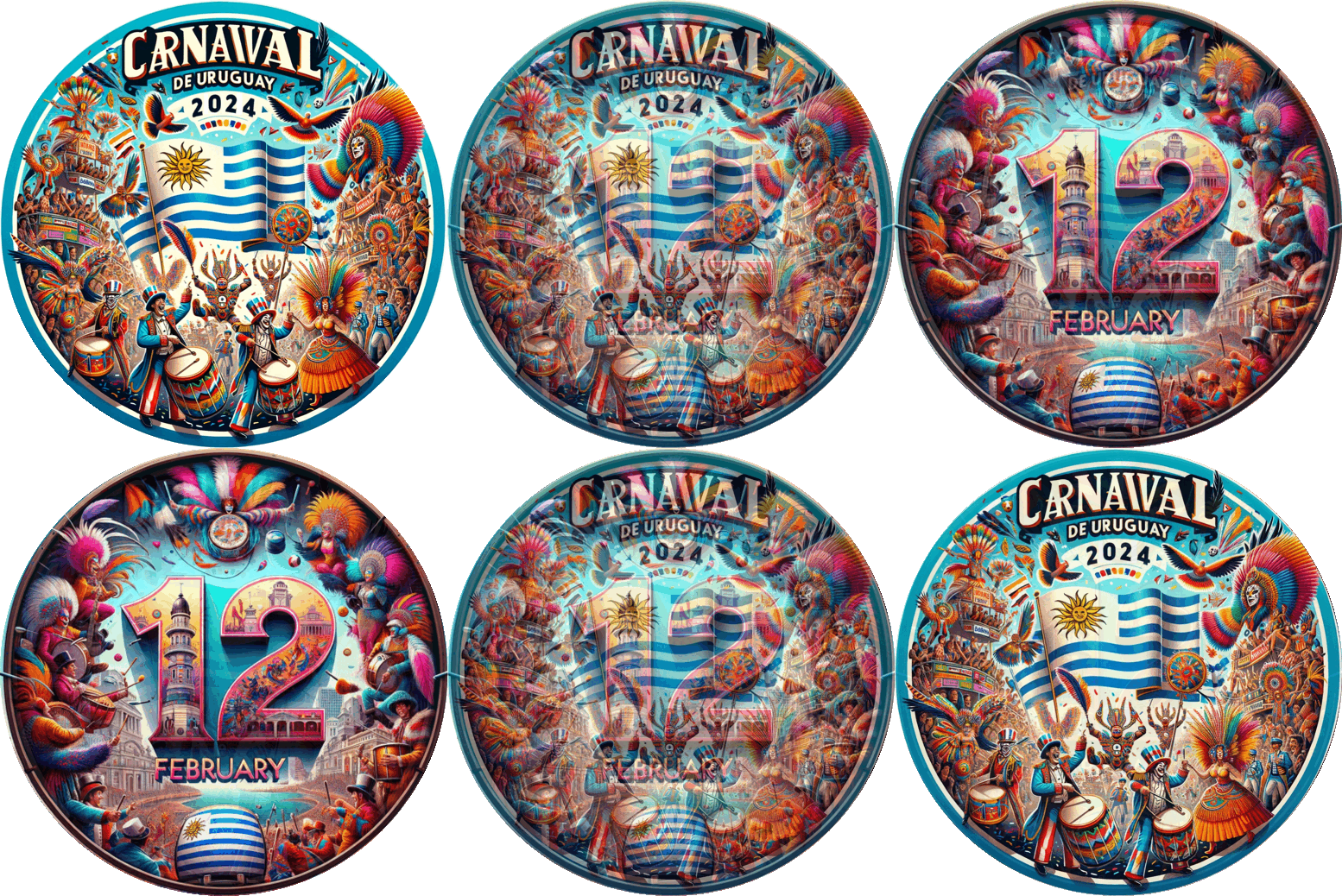
Carnaval de Uruguay 2024
2024-02-14
The Carnaval de Uruguay is the longest carnival in the world, extending over 40 days, typically starting in late January and ending in late February or early March. It is rooted in African and European traditions. Central to the carnival are the "Llamadas" parades, which highlight the African heritage through Candombe music and dance, a rhythmic beat played on "tamboriles" (drums). These parades, filled with vibrant costumes and infectious energy, celebrate the country's African roots and community spirit. Another hallmark is the "Murgas," theatrical musical groups that perform satirical and political commentary, reflecting the social and political climate of Uruguay. These performances, characterized by elaborate costumes, makeup, and harmonious singing, are both entertaining and thought-provoking, offering insights into the country's issues and psyche. The carnival also features "Comparsas," which include colorful and dynamic groups of dancers and musicians, parading through the streets, contributing to the festival's lively atmosphere. Additionally, "Humoristas," "Parodistas," and "Revistas" offer comedy, parody, and magazine-style performances, respectively, showcasing the diverse talents of the participants. The Carnaval is a living celebration of Uruguay's identity, unity, and creativity. Salud! More: https://en.wikipedia.org/wiki/Uruguayan_Carnival Art&Text supported by ChatGPT.
Epilepsy Day 2024
2024-02-14
International Epilepsy Day, 2nd Monday of February, raises awareness about epilepsy, a neurological condition affecting people across all ages, ethnicities, and geographical regions. Epilepsy is characterized by recurrent, unprovoked seizures, (Wikipedia) ...abnormal, excessive, and synchronized electrical discharge in (neurons) brain cells... It is one of the world's oldest recognized conditions, with written records dating back to 4000 BC. The term "epilepsy" derives from the Greek word for "attack," reflecting the sudden onset of seizures. The condition's neurological basis was not understood until the 19th century. Globally, epilepsy affects over 50 million people, making it one of the most common neurological diseases. Incidence rates are highest in young children and older adults. Up to 80% of people with epilepsy live in low- and middle-income countries, where access to treatment and care can be significantly limited. The discovery of epilepsy's causes and treatments has evolved over centuries, from ancient misconceptions associating seizures with supernatural phenomena, to the 19th century, when scientists like John Hughlings Jackson began to understand its neurological underpinnings. Today, treatments include medications, surgical interventions, and dietary changes, though approximately 30% of individuals with epilepsy live with treatment-resistant forms of the condition. More: https://en.wikipedia.org/wiki/Epilepsy Art&Text supported by ChatGPT.
