Orphan Drug Act, January 4th 1983
2024-01-31
The Orphan Drug Act (ODA) of 1983 is a critical milestone in clinical research, especially for rare diseases affecting fewer than 200,000 people in the U.S. Prior to the ODA, only 38 orphan drugs were approved. Since its enactment, over 600 orphan drugs have been approved, indicating a significant shift in pharmaceutical research and development. This Act provides incentives such as tax credits, seven-year market exclusivity, and grant funding, encouraging companies to invest in orphan drug research. The impact is substantial: as of 2020, over 7,000 rare diseases have been identified, affecting an estimated 25-30 million Americans. Orphan drugs now represent over 20% of pharmaceutical market revenues, reflecting their growing importance. The ODA's influence extends beyond just numbers. By focusing on less common diseases, it has opened new avenues in medical research, often leading to broader applications in more common conditions. For instance, research on rare genetic disorders has enhanced understanding of genetics in general medicine, and the new field of Cell and Gene Therapy, CGT, is expanding into many indications. The Orphan Drug Act has not only provided hope and treatment options to millions with rare diseases but also advanced the overall field of medical research. More: https://en.wikipedia.org/wiki/Orphan_Drug_Act_of_1983 https://en.wikipedia.org/wiki/Orphan_drug #RareDiseases #CGT #ClinicalTrials #Healthcare Text modified from ChatGPT, Art by Dall-E.

Von der Tag des Patienten website, https://tagdespatienten.de/: "Seit 2016 findet jedes Jahr am 26. Januar der Tag des Patienten statt. Träger dieses Aktionstages sind der Bundesverband Beschwerdemanagement für Gesundheitseinrichtungen e. V. (BBfG) und der Bundesverband Patientenfürsprecher in Krankenhäusern e. V. (BPiK). Mit dem Tag des Patienten verfolgen BBfG und BPiK das Ziel, die Situation und Rolle von Patientinnen und Patienten durch Information, Mitwirkung und Mitentscheidung zu stärken und zu verbessern." Der Tag des Patienten in Deutschland ist somit eine wichtige Gelegenheit, um das Gesundheitswesen zu reflektieren und zu verbessern, sowie um die Stimmen der Patienten in den Vordergrund zu rücken. Jeder Patient ist ein Individuum mit eigenen Rechten und Bedürfnissen; eine empathische und respektvolle Behandlung ist grundlegend für eine erfolgreiche medizinische Versorgung. While there isn't a direct equivalent to "Tag des Patienten," the U.S. observes National Patient Recognition Week in early February, focusing on patient satisfaction and the patient experience in healthcare. Mehr: https://twitter.com/patientendialo1 / Patientendialog https://twitter.com/BPiK_eV / Bundesverband Patientenfürsprecher in Krankenhäusern e.V. https://twitter.com/BBfGeV / Bundesverband Beschwerdemanagement für Gesundheitseinrichtungen e.V. Art von den Social media Materialien https://tagdespatienten.de/ + Dalle-E, Text supported by ChatGPT.

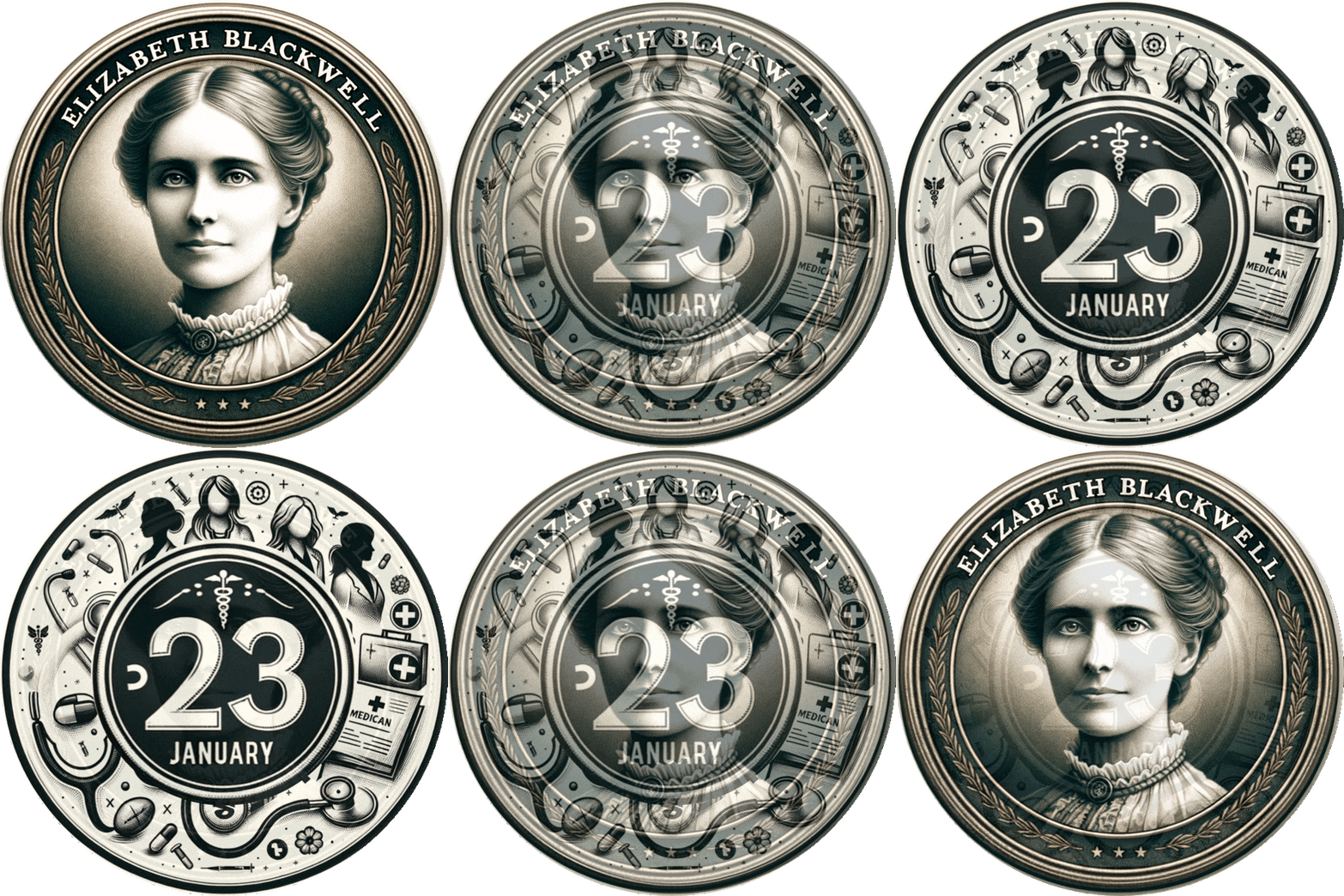
Elizabeth Blackwell received her medical degree as the first woman in the USA | January 23, 1849
2024-01-31
Elizabeth Blackwell, born on February 3, 1821, in Bristol, England, was a pioneering figure in medicine. She made history as the first woman to receive a medical degree in the United States, 23 January 1849, Geneva Medical College in New York. Blackwell's journey to becoming a physician was fraught with challenges. She faced significant opposition due to her gender, with many medical schools rejecting her application. Her acceptance at Geneva Medical College was initially considered a practical joke. Despite these hurdles, Blackwell's determination never wavered. Her graduation marked a pivotal moment in the history of medicine and women's rights, challenging the prevailing gender norms of the time. Following her graduation, she continued to break barriers, focusing her efforts on promoting the education of women in medicine. In 1857, she opened the New York Infirmary for Indigent Women and Children with her sister Emily, who also became a doctor, and another colleague, Dr. Marie Zakrzewska. She also she became the first woman to have her name entered on the General Medical Council's medical register of Britain. Blackwell's pioneering efforts reshaped the medical landscape, transforming it into a more inclusive and diverse field. Her resilience and tenacity in the face of adversity continue to inspire and empower women in medicine and other male-dominated fields. More: https://en.wikipedia.org/wiki/Elizabeth_Blackwell Art by Dall-E, text supported by ChatGPT.
Australia Day | January 26, 2024
2024-01-31
Australia Day, January 26th, commemorates the 1788 arrival of the First Fleet of British ships at Port Jackson, and the raising of the flag of Great Britain at Sydney Cove. Indigenous Australians have inhabited the land for over 65,000 years, with evidence like the remains of Mungo Man, dating back some 40,000 years, highlighting their deep connection to the continent. Australia started to break away from Gondwanaland and Antarctica over 100 million years ago, so flora and fauna evolved in isolation to an unique wildlife, especially marsupials like kangaroos, koalas, and wombats. Australia is also the world's smallest continent and sixth-largest country. It is home to a diverse landscapes, ranging from the arid outback to lush rainforests and extensive coastlines. The country's major cities, including Sydney, Melbourne, Brisbane, Perth, and Adelaide, are known for their multiculturalism and vibrant lifestyles. Sydney, with its iconic Opera House and Harbour Bridge, is particularly noteworthy. Australia was one of the first countries in the world to grant women the right to vote in 1894. It is home to the longest fence in the world, the "Dingo Fence," built to keep dingoes away from fertile land. Australia Day itself is a subject of controversy, with some Australians referring to it as "Invasion Day" or "Survival Day," reflecting its complex and often painful history. More: https://en.wikipedia.org/wiki/Australia Art and text supported by ChatGPT.

IV Nurse Day | January 25, 2024
2024-01-31
On National IV Nurse Day we celebrate the incredible contributions of Intravenous Nurses, who have been an essential part of healthcare since the mid-20th century. With advancements in medical technology, the role of IV nurses has evolved remarkably, becoming indispensable in modern medicine. There are over 100,000 infusion nurses in the US alone. These skilled professionals specialize in administering medications, fluids, and nutrients directly into veins, a practice that has become increasingly sophisticated over time. They are trained to handle a variety of complex tasks, including managing central lines (central venous catheters), PICC lines (Peripherally inserted central catheters), and other types of intravenous access. Their expertise extends beyond mere administration; they are also responsible for monitoring patients, educating them about their treatments, and ensuring the highest standards of infection control. The importance of IV nurses cannot be overstated. They play a critical role in emergency rooms, intensive care units, chemotherapy wards, and during surgeries, providing life-saving treatments and care. Today, let's take a moment to appreciate these dedicated professionals for their tireless work, deep expertise, and unwavering commitment to patient care. Happy IV Nurse Day! More: https://www.ins1.org/about-us/iv-nurse-day/ https://en.wikipedia.org/wiki/Intravenous_therapy Art by Dall-E and ezgif, text supported by ChatGPT.

Byron appreciation token 2023: A show of gratitude for your usage of the Bayer platform in 2023.
2023-12-25
Cheers to our global gang! 🌍🌟 As the year draws to a close, we're giving a shoutout to the 13,000 amazing contributors on our platform. By leveraging Byron, the exchange within our company becomes more seamless, paving the way for new projects and strengthening our unity within Bayer. 🚀 Presenting this exclusive POAP as a massive thank you, because without you, this platform wouldn't be what it is. 🙌 Byron, an acronym for Bayer Open Network, is our Skills database for Bayer employees, including speed networking. We kicked off in 2018 as a True North grassroots side initiative, going live in 2020. Created by over 40 students and programming enthusiasts with the help of EY Croatia. Today, we have 13,000 registered users from 89 countries, in 293 cities. People have searched for something in Byron at least 25,000 times and engaged in 31,000 1:1 Speed network meetings. http://go/byron Looking ahead, we're thrilled about the future and the prospect of our community growing even larger. Can't wait for more collaborations and successes together in the coming year! 🎉✨ Art created by Lena Schermer

En este evento académico, los médicos especialistas tendrán la oportunidad de conocer todo lo relacionado a esta innovación terapéutica con beneficio cardiorenal para el paciente diabético tipo 2. Con foco en la innovación y en mejorar la calidad de vida de los pacientes, Bayer también se enorgullece de promover prácticas y tecnologías Web3 innovadoras como NFT POAPs. Este es el segundo POAP NFT en Uruguay relacionado con un producto farmacéutico. Si recibió este POAP, usted es un verdadero pionero en el espacio Web 3.0. Por favor lea los términos y condiciones de Bayer POAPs en el siguiente enlace: https://bayer.com/poap Por más información sobre Bayer Web3, contacte a: jesusdelvalle@bayer.com o marianoel.sosa@bayer.com
